Guides
Markets where a vending machine business thrives
Assessing a market for vending: count the buildings that hold people for hours, test density and access, and price a new area as a project with a break-even.
What to take away
- The best market for you is almost always the one you can reach, because distance is the binding constraint.
- Assess an area by counting qualifying buildings per square mile, not by population.
- Check supplier coverage and local licensing before liking an area. Both reset at the boundary.
- Price a new area as a project with a break-even and a number of machines, not as a longer drive.
Why national rankings do not help
Articles that rank cities for vending are ranking population, employment or growth. None of those decides whether a route works.
What decides it is how many buildings within a short drive hold people for hours at a stretch, how many you can get into, and how far apart they are. A modest city with three industrial parks close together can support a better route than a large one where the qualifying buildings are spread across forty miles.
So the assessment below is about an area you can reach, done by you, with a map and a car.
Step one: count qualifying buildings
Draw a circle you are willing to service and count the buildings inside it that hold people for hours: manufacturing and distribution sites, campuses, medical buildings, hotels, larger residential complexes, gyms, laundries, transport facilities.
Qualifying buildings to count
- Manufacturing and distribution sites
- Campuses and medical buildings
- Hotels and larger residential complexes
- Gyms, laundries, transport facilities
- Exclude retail strips and pass-through spots
Do not count retail strips or anywhere people pass through in minutes. They can work at particular hours, and they are not what makes a market.
Then compute the density that matters: qualifying buildings per square mile, or per fifteen minutes of driving. That figure predicts your cost per stop, which predicts whether the route can pay a driver later.
Step two: test the access
A building that will not let you in is not a prospect.
Site access: managed vs owner
Nationally managed sites
- Decision maker
- Distant head office
- Sales cycle
- Much longer
- Approach
- Procurement team
Owner managed businesses
- Decision maker
- On site
- Sales cycle
- Shorter
- Approach
- Direct owner
Walk into a sample. Ask who looks after the break room. You are testing three things: whether the buildings are approachable, whether the decision maker is on site or at a distant head office, and whether there is already a machine.
Areas dominated by nationally managed sites, where every decision goes to a procurement team in another state, take much longer to enter than areas of owner managed businesses. That is not a reason to avoid them, and it is a reason to plan for a longer sales cycle.
Step three: check the incumbents
Look at the machines that are already there. A market full of well served machines is not closed, but the way in is renewal timing and service rather than a commission offer.
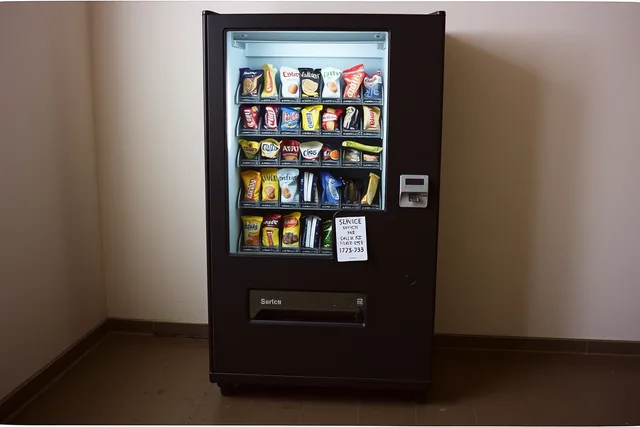
Note which buildings have visibly weak service: half empty machines, faded out of order notes, dusty glass. That list is worth more than any ranking, because it is a list of buildings with a reason to switch. What to look for is set out in the observation method for competing operators.
Step four: check what resets at the boundary
Four things change when you cross into a new area, and all four can be checked before you commit.
What resets at the boundary
- Supplier coverage and delivery minimums
- City or county licensing and device permits
- County health department requirements
- State sales tax treatment across state lines
- Storage lease if carrying stock fails
- Local driver wages from BLS estimates
Supplier coverage. Ask your distributor whether they deliver there and on what minimum. A second supplier means a second minimum order and more stock tied up.
Licensing. Ask the new city or county licensing office about business licenses and device permits, and the county health department about their requirements. If you are crossing a state line, ask the state revenue department about sales tax treatment as well, since it is a state matter.
The U.S. Food and Drug Administration: State Retail and Food Service Codes and Regulations directory names the agency in each state, and the answers belong with your existing licensing file, dated and labeled by area.
Storage. If the area is far enough that carrying stock from home stops working, that is a cost with a lease attached.
Labor. If the area will eventually need its own driver, use the metropolitan wage estimates in the U.S. Bureau of Labor Statistics: Occupational Employment and Wage Statistics Tables rather than a national figure, and check whether the route can carry a paid driver at all.
Step five: price it as a project
A new area is a project with its own break-even, not an extension of the current route.
Price a new area
- Ask what the area costs before it earns
- Add travel, storage, licensing, stock
- Ask how many machines cover that
- Compare to qualifying buildings supply
- If more machines than buildings, area fails
Ask what the area costs before it earns: travel, any storage, the licensing work, and the stock to fill new machines. Then ask how many machines at what average return would cover that, and how long it would take to place them at your actual placement rate.
If the answer is more machines than the area's qualifying buildings can supply, the area does not work, and that conclusion is worth reaching on paper rather than after eighteen months. The expansion framework sets out the anchor rule for entering an area you have decided is worth it.
What makes an area genuinely good
Five properties, in rough order of importance.
- Density of qualifying buildings, because it decides cost per stop.
- Long dwell times, because captive audiences buy and passing traffic mostly does not.
- Weak incumbent service, because it creates openings you can win on quality.
- Owner managed sites, because decisions get made on the premises rather than in another state.
- Supplier coverage, because a route your distributor will not deliver to carries a permanent extra cost.
Population, income and growth statistics appear on every ranking and predict very little of this. General guidance on researching a market for a small business sits in the U.S. Small Business Administration: SBA Business Guide, and the honest version for this trade is that the useful research is done by driving.
Testing an area before committing to it
Take one anchor site, place a machine, and give it a fixed period with a decision at the end.
Record what you actually learn: how long the drive takes at the hours you drive, how long the visit takes including waiting, what the machine sells and which selections, and how the site's people differ from your existing ones. That is a real test, and it is cheaper than a plan.
Set the date at the start. An anchor that has not found neighbors by its date is not a slow start; it is an answer, and moving the machine back into your ring is the correct response.
Where the answer is yes, the product mix will still need local calibration, because taste and demand vary more between buildings than between cities. If this is your first route rather than an expansion, run the same assessment on the area you already live in before looking anywhere else.
Common questions
Is a big city better than a small one for vending?
Not inherently. Big cities have more qualifying buildings and more competition, worse traffic and higher costs. What matters is the density of buildings you can serve within a reasonable drive, and that can be as good in a small industrial town as in a large metropolitan area.
Should I follow a growing population into a new suburb?
Population growth produces housing before it produces the buildings that support vending. Watch for the employment and institutional development instead, which arrives later and is what actually creates demand.
How many buildings do I need in an area to justify entering it?
Enough that you can reach a cluster of machines in one trip, which is a route design question rather than a fixed number. Work backward from your capacity in machines per day and your service interval, and the answer for your operation falls out.